

A Functional Approach to Neurological Rehabilitation
Has someone you loved recently suffered a stroke or traumatic brain injury? Have you recently received a diagnosis of a neurological disorder? Did you know that physiotherapy is integral in managing neurological disorders.
Neurological rehabilitation is a comprehensive program that helps people with different neurological conditions manage their symptoms and improve their overall function. No two programs look the same, especially at Foundation Physio, where our multidisciplinary team works together to create truly customized programs to suit each patient’s unique needs.
Today, we want to explore our approach to neurological rehabilitation, including the conditions we can help manage and the ways we strive to encompass all aspects of health and well-being into our plans.
What Conditions Benefit from Neurological Rehabilitation?
Neurological rehabilitation focuses on injuries and conditions that affect your nervous system. At Foundation Physio, we can help manage the following:
Stroke
- A stroke can cause several physical, emotional, and cognitive symptoms, depending on the areas of the brain affected. You may struggle with movement, balance and coordination, paralysis, and more.
Multiple Sclerosis (MS)
- MS affects how your nerves communicate, leading to issues with movement, gait, muscular weakness and stiffness, balance and coordination, and more.
Parkinson’s
- Parkinson’s disease is a degenerative disorder that affects your motor ability. In the early stages, it can cause tremors and changes in your movement. As the condition progresses, these symptoms worsen.
Cerebral Palsy (CP)
- CP refers to several disorders that affect movement and posture, starting in infancy or early childhood. Symptoms can vary dramatically but can include muscles that are either too stiff or under toned, difficulties with balance and coordination, and gait issues.
It’s important to remember that this is by no means an exhaustive list of neurological conditions that can benefit from neurological rehabilitation. If you’re curious to learn more about the different conditions we can help manage, call our clinic to find out if you or your loved one is a good candidate.
You’re More than Your Symptoms: The Importance of Personalization
The Foundation Physio team consists of healthcare providers from across different fields, including physiotherapy, chiropractic care, and massage therapy. When we develop a neurological rehabilitation program, we consider the whole person, not just your symptoms, and our providers will work together to create a program that suits your needs.
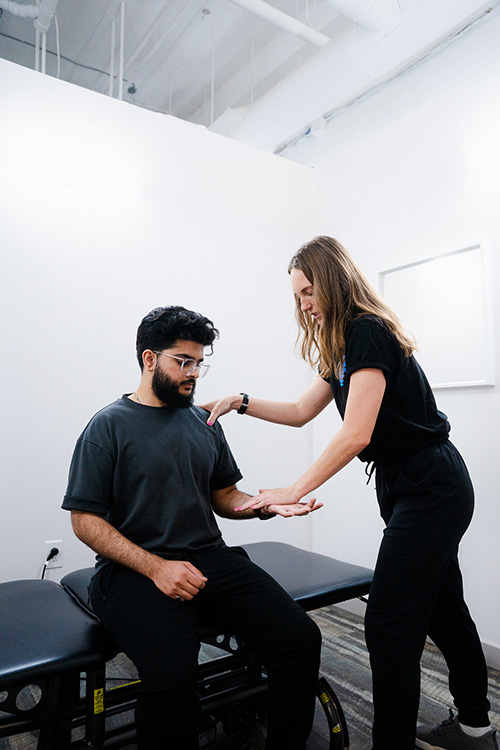
We start with a detailed assessment, during which we work with the patient, their family, and their pre-existing healthcare team to learn more about their specific needs and goals. Neurological disorders can affect people in wildly different ways, even if they have the same injury or condition. The assessment is foundational to helping you get the care you need.
Once we have a complete picture of your condition, we’ll develop your rehabilitation program. Again, every program looks different depending on your specific symptoms, although the basic goal is the same: helping you manage your symptoms and restore or maintain as much strength and functionality as possible.
How Do We Do This?
Our rehabilitation programs take a whole-body approach by blending different techniques, including the following:
PHYSIOTHERAPY
Therapeutic Exercise
- We’ll show you exercises aimed at improving muscle strength and improving overall mobility. We tailor these exercises to your ability level, symptoms, and goals.
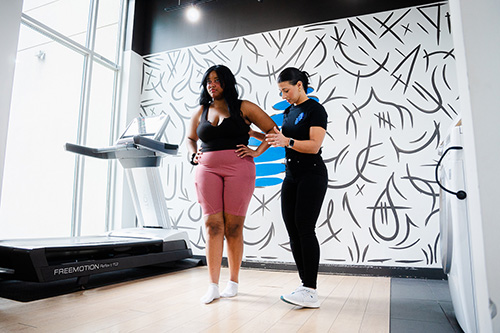
Gait and Balance Training
- Neurological disorders often affect balance, coordination, and gait. In some cases, they can lead to dizziness and vertigo. We’ll create a customized balance training program to address these challenges and help reduce your fall risk.
Functional Training
- Our team can help train you in day-to-day movements essential to maintaining independence. We can help you practice walking up stairs or uneven surfaces, reaching to grab items off a high shelf, and more.
MASSAGE THERAPY
- Massage can be extremely beneficial for people with stiff muscle tone (spasticity), a common symptom in cerebral palsy and multiple sclerosis. Massage therapy helps loosen these muscles, improving mobility and function.
Schedule an Appointment To Learn More
Personalization is the foundation of the whole-body approach to neurological rehabilitation at Foundation Physio. The best way to learn more about what we can do to help is to schedule an initial assessment.
Call us today to get started.
Join Us for a Healthier You – Book Today!
Return to Foundation Physiotherapy and Let’s Continue Your Journey to Wellness Together. Schedule Your Appointment Now!

Discover Healthy Recipes
Anti-Inflammatory Ginger & Turmeric Carrot Soup
Ingredients
- 1 tablespoon olive oil
- 1 leek, cleaned and sliced
- 1 cup chopped fennel bulb (1 small head)
- 3 cups chopped carrots
- 1 cup chopped butternut squash (or more carrots)
- 2 garlic cloves, minced
- 1 tablespoon grated ginger (about a 2-inch piece)
- 1 tablespoon turmeric powder
- Salt & pepper to taste
- 3 cups low-sodium vegetable broth
- 1 can lite coconut milk (14.5 ounces)
Directions
Heat the olive oil in a large dutch oven or saucepan. Add the fennel, leeks, carrots, and squash. Sauté for 3-5 minutes until the veggies start to soften. Add the garlic, ginger, turmeric, salt, and pepper, and sauté for a few more minutes. Add the broth and coconut milk. Bring the mixture to a boil, cover, and simmer for 20 minutes. Once the soup is cooked, add it to a blender and blend until creamy. You could also use an immersion blender. Taste and adjust the seasonings to your taste.
Serve immediately with a dollop of coconut yogurt and enjoy!
Golf Better Physiotherapy Program
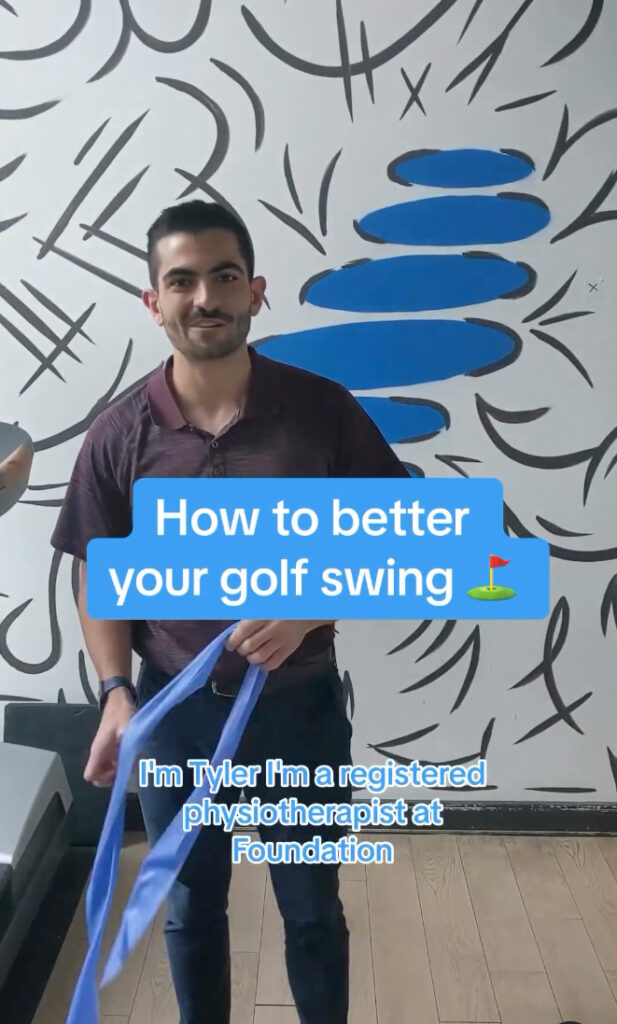
A few more weeks left of golf season – How to better improve your golf swing!
Click the button below to learn about our Golf Better Physiotherapy Program developed and delivered by Tyler Ottolino.
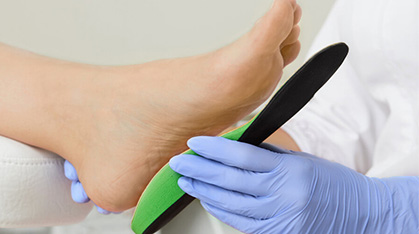
Get Your Orthotics Before the End of the Year!
Quality orthotics can alleviate pressure, eliminate pain, and promote stability. It’s important to receive custom orthotics that are created to fit the exact shape of your foot in order to receive the maximum benefits.
As physiotherapists and chiropractors, we are specifically trained in musculoskeletal movement and have extensive knowledge of gait analysis and biomechanics of the lower extremities. We can provide you with orthotics that uniquely fit the contours of your feet, giving you the maximum amount of function, support, and comfort.
The assessment starts with an understanding of your specific needs, followed by a gait assessment and biomechanical assessment of your foot and lower limb. Your feet will be cast using foam in a non-weight-bearing position. After the assessment, it will likely take a few weeks for your custom orthotics to come back from the lab.
You will be contacted for a fitting appointment when the orthotics arrive. Orthotics can be fine-tuned and adjusted for the proper fit at that time.
Our Patients Get Great Results
“I started coming when I noticed a nagging persistent pain in my shoulders and upper back, which would be painful while swimming and just doing my job (I’m a chef). Chantal was super helpful, knowledgeable, had a super positive attitude, and put me on a great track. Now I can swim without any pain and work is definitely much easier.
Thanks Chantal!”
– Ajani T.
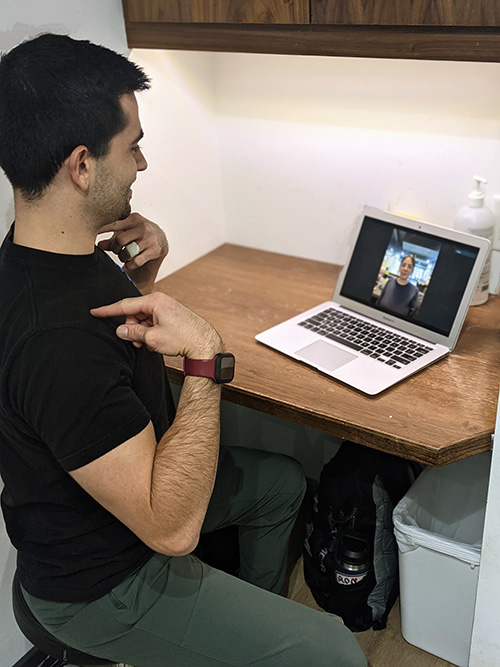
Posture Tips for Students and Back to the Office
Do you have difficulty standing or sitting up straight? Do you find yourself slouching over your laptop hours into your homework?
We’ve all heard the words “sit up straight” before. But are you aware of how important your posture actually is? Your spine is meant to operate in a specific way. Each time you move, sit, or stand in ways that disrupt your spine’s correct position and operation, you can end up creating long-term problems.
Good posture can feel easier said than done, especially when you’re a busy student. Fortunately, there are multiple simple ways to improve your posture. Check out the list below to unlock expert advice from our therapists.
Watch your head
Laptops, tablets, and cell phones can all encourage Forward Head Posture (FHP). When viewed from the side, optimal posture is when the earlobe is relatively vertical to the center of the shoulder. When the head is positioned forward of the shoulders, this is referred to as FHP.
FHP has a negative impact on the spine and should be avoided as much as possible. We know it can be hard to monitor your posture while you’re deep in the studying zone, but try to take short breaks to check in with your body and avoid FHP.
Adjust your backpack
If your back is hurting, your backpack may be to blame.
The gap between your back and your backpack is one factor that stresses your back and, as a result, damages your posture. To correct this, adjust your backpack handles so that they are as close to your back as possible in order to prevent your spine from curving excessively.
Take breaks
Are you the type of person to sit down for hours to power through your assignments? While this certainly reflects a good work ethic, it can actually damage your upper and lower back.
A major cause of back pain is the inactivation of the glutes, which happens when you sit for long periods. Take 5-10 minute breaks every 30 minutes to walk around, stretch, and activate your muscles. You might find that this benefits your mental health as well as your physical health!