


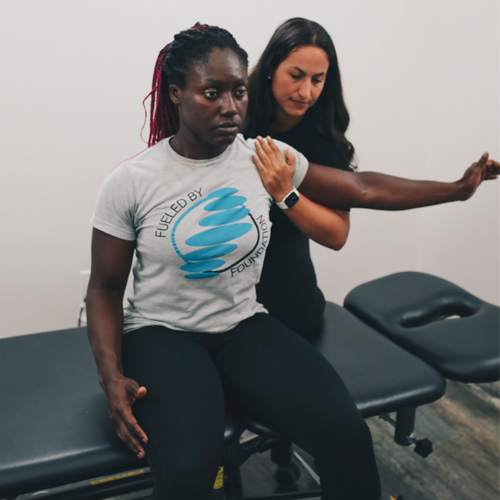
Make a Strong Rotator Cuff Recovery with Physiotherapy
Follow your Treatment Plan After a Rotator Cuff Injury – Here’s Why!
It is estimated that as many as 2 million adults are diagnosed with rotator cuff injuries every year in the United States and Canada. Up to 80% of those patients initially choose non-surgical treatments, like physical therapy, to repair and recover from the injury rather than undergoing a surgical procedure. Research suggests that approximately 90% of patients have positive outcomes and improved function with physical therapy, especially when the rotator cuff injury is identified and treated early.
The decision for surgical repair is typically based on factors such as the severity of the injury, the patient’s age and activity level, and their response to non-surgical treatments. Fortunately, our integrated team can help you promote healing, improve your recovery, and possibly prevent surgery!
At Foundation Physiotherapy, our team uses a full-body treatment model that considers how your shoulder interacts with the rest of your movement system. Our integrated care team may involve physiotherapists, massage therapists, chiropractors, or other professionals who work together to help you heal more completely.
Whether you need surgery or not, physiotherapy should be your first option for shoulder and rotator cuff injuries!
What is a Rotator Cuff Injury?
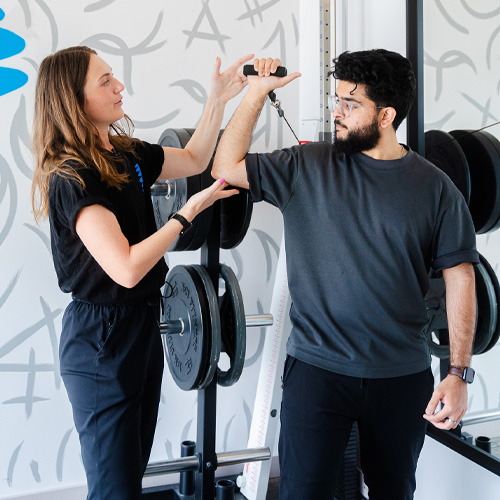
The rotator cuff is a group of muscles and tendons surrounding the shoulder joint that play a major role in the movement and stability of your shoulder. These muscles work together to stabilize the joint and allow you to lift, reach, and rotate your arm.
Rotator cuff injuries can happen for several reasons:
- Repetitive overhead motions
- Sudden trauma or impact
- Age-related degeneration
Physiotherapy Before and After Rotator Cuff Surgery
If you do have to go in for a surgery or injection, physiotherapy can help set you up for a smoother and more successful recovery.
Pre-Surgery Advantage:
- Go into surgery stronger: Build muscle strength and control around your shoulder for better support during healing.
- Reduce pain and restore motion: Physical therapists can use manual therapy techniques to minimize discomfort and improve range of motion.
- Recover faster: Stronger muscles translate to a quicker recovery and regaining full shoulder function.
- Prepare mentally: Understand what to expect post-surgery and gain strategies to optimize your recovery, boosting your confidence.
Post-Surgery/Procedure Benefits:
- Manage pain effectively: Our therapists use a variety of manual techniques and modalities to keep pain at bay.
- Regain lost motion: Our team will help stretch and loosen any restrictions to restore your shoulder’s range of motion.
- Rebuild strength: Regain the strength you lost in your rotator cuff and supporting muscles.
- Return to your life: Physical therapy’s ultimate goal is to help you use your shoulder fully again, allowing you to perform daily activities without limitations.
- Prevent future injuries: Learn exercises to maintain strength and flexibility in your shoulder, reducing the risk of re-injury.
Your care is not limited to the shoulder. We assess your entire upper body and posture to identify compensations or weaknesses that may slow your recovery. Our collaborative team addresses each piece, creating a well-rounded rehab experience.
What to Expect During Rotator Cuff Recovery
Physical therapy sessions may include a combination of techniques to alleviate symptoms and promote healing.
- Manual therapy to reduce pain, reset your nervous system and help improve blood flow
- Stretching to improve/restore shoulder range of motion
- Strengthening exercises to build the muscles in and around the shoulder joint and shoulder blades
- Functional movements to restore normal use of the shoulder
In some cases, our team may also provide support through massage therapy or chiropractic adjustments if your posture or mechanics are being affected elsewhere in the body.
Personalized Treatment with Foundation Physio
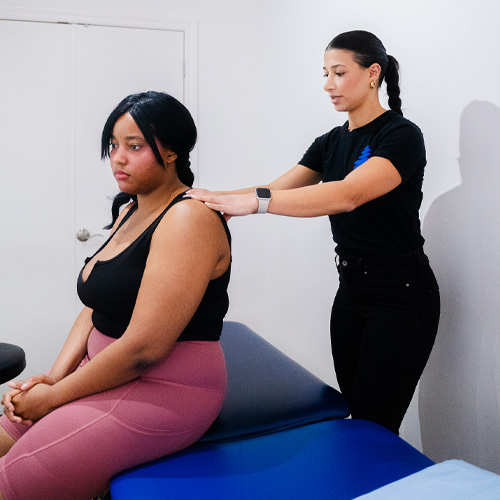
Your recovery begins with a full assessment of your health history, current condition, and movement patterns. We follow this with strength and range of motion testing to understand exactly what your shoulder needs. Your customized Treatment Plan includes:
- Analysis and Diagnosis of the injury and surrounding issues
- Education on how long and how many sessions will be required
- Referral to other therapies or modalities to enhance your recovery
- Education on proper mechanics and safe activity progression
- Guidance for at-home exercises to reinforce clinic progress
- Support for a safe return to work, sports, or daily life
- Ongoing strategies for long-term maintenance
You’re not working on your recovery alone. Each provider involved in your care communicates and collaborates to help you reach your goals more efficiently. It takes a whole-body perspective, a personalized plan, and a team to supports your recovery.
Call us today to schedule your assessment and take the first step toward long-term strength, comfort, and confidence in your shoulder.
Your Rotator Cuff Injury is MORE THAN YOUR SHOULDER
How many times have you gotten the diagnosis “rotator cuff tendonitis” – it’s a classic over diagnosis for shoulder pain.
But with an in depth assessment, you find:
– Structural Issues: Mild rotator cuff tendinopathy confirmed on imaging.
– Functional Issues: Thoracic spine stiffness (limited extension and rotation); Poor scapular control (serratus anterior weakness); Over-reliance on upper traps when reaching overhead and a desk setup contributing to a forward head/rounded shoulder posture.
If you treated only the structure (e.g., anti-inflammatories, shoulder only stretching), you might improve slightly, but the dysfunctions would keep stressing the tendon — leading to incomplete recovery or recurrence.
For full recovery, treatment has to go beyond the symptoms, treat structure and function:
▶️Mobilize thoracic spine
▶️Retrain scapular stabilizers (serratus anterior, lower traps)
▶️Modify desk ergonomics
▶️Teach motor control strategies for reaching overhead
🏅 The Outcome: Your shoulder pain resolves fully. You move better and live better.
Get Fueled – Book Today!
Don’t Wait. Move Better. Feel Better. Live Better. Get Fueled.
Refer a Friend
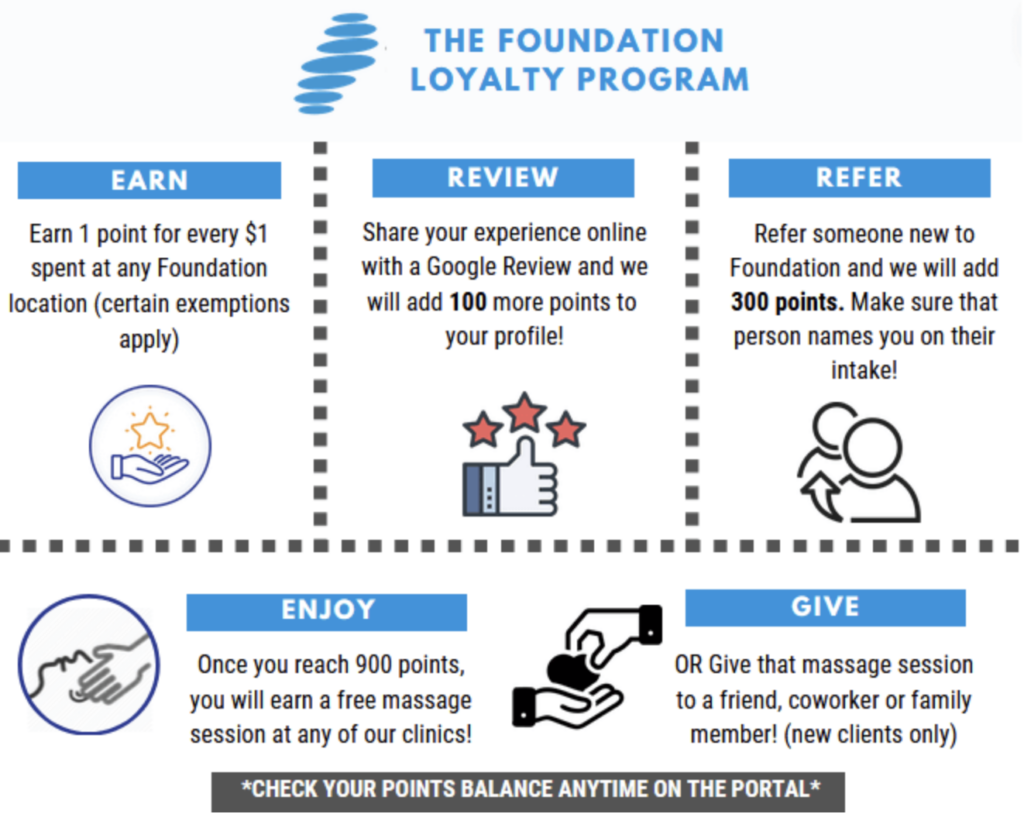
If you’ve experienced the outstanding care at Foundation Physiotherapy, why not share it with your friends? Referring them means giving them access to personalized treatment that can make a real difference in their health and well-being. Help them find a trusted healthcare partner.
Refer a friend, get 300 loyalty points!
Collect points to earn a free massage!
Home Care Physiotherapy
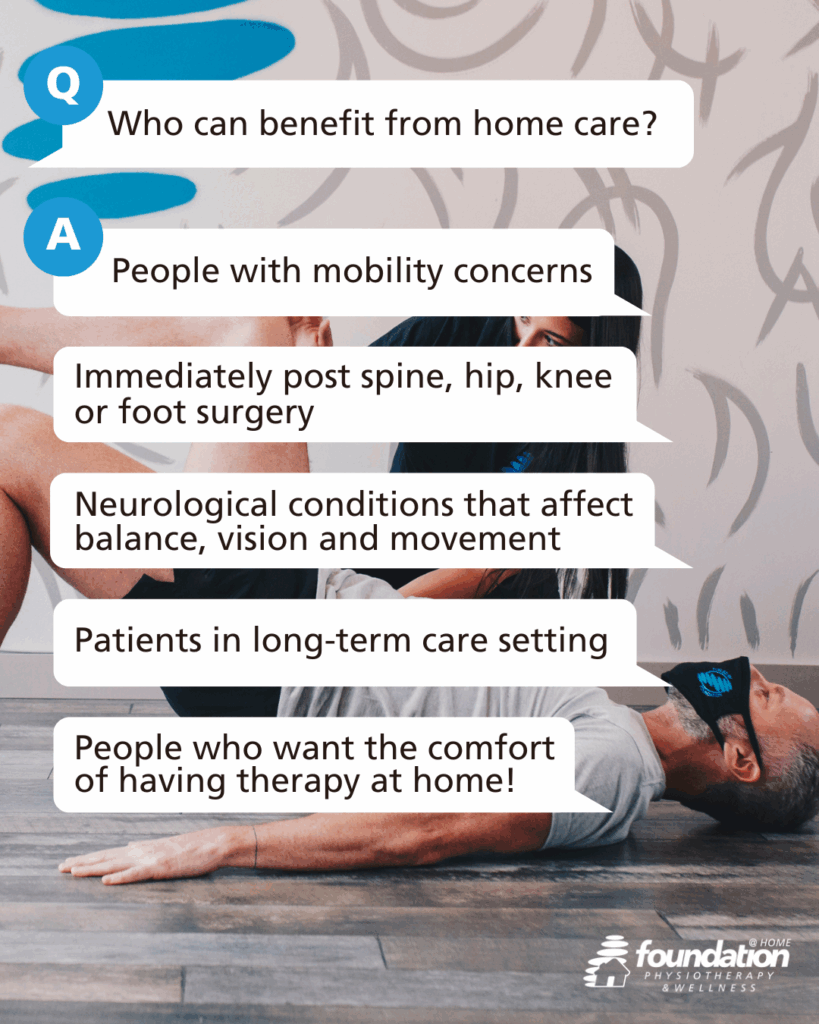
If you or a loved one is facing physical limitations due to surgery, stroke, or other health challenges, Foundation Physiotherapy & Wellness in Toronto now offers Foundation @HOME—bringing expert physiotherapy directly to your doorstep. Our licensed therapists provide personalized, clinic-quality care in the comfort of your home, making recovery more accessible, convenient, and tailored to your environment.
With benefits like reduced travel, improved comfort, and the ability to involve family in care, our in-home services support safe, effective rehabilitation. From your initial assessment to customized treatment plans and follow-up sessions, we’re here to help you regain independence, mobility, and a better quality of life—right where you live.

Healthy Recipe:
Maple Roasted Root Vegetables With Pecans and Thyme
Savor the cozy, caramelized goodness of Maple Roasted Root Vegetables with Pecans and Thyme—a perfect blend of sweet, savory, and nutty flavors. This warm, rustic dish makes a delicious and nourishing addition to any late night cozy meal.
Ingredients
- 1 red onion, sliced
- 2 large carrots, peeled and diced to 1″ cubes
- 2 large parsnips, peeled and diced to 1” cubes
- 1 large orange sweet potato, diced to 1” cubes
- 1 large purple sweet potato, diced to 1” cubes
- 1 bunch radishes, ends trimmed and halved
- 2 tbsp olive oil
- 4 tbsp maple syrup
- 1 tsp apple cider vinegar
- 1 tsp sea or kosher salt
- 1 tsp cracked black pepper
- ⅓ c chopped pecans
- 1 tbsp fresh thyme
Instructions
Heat oven to 425°F. Line two baking sheets with parchment paper and set aside. Combine olive oil, maple syrup, and apple cider vinegar into a small bowl or 1-cup measuring cup and whisk until smooth. Place the prepared root vegetables into a large mixing bowl. Pour the maple oil over the vegetables and toss until they’re evenly coated. Spread the vegetables evenly between the two baking sheets. Ensure that none of the vegetables are too tightly packed together. There will be residual maple oil at the bottom of the bowl, so pour that over the vegetables and toss on pan until evenly coated. Sprinkle the vegetables with salt and pepper. Transfer the baking sheets to the oven and roast for 20 minutes. Remove the sheets from the oven, stir the vegetables, then return to the oven and roast an additional 20 minutes. Remove the sheets from the oven one final time and sprinkle the pecans over the vegetables. Return to the oven to roast for 5 additional minutes. Remove the baking sheets from the oven and sprinkle with fresh thyme. Transfer to a serving bowl and serve immediately.
Follow us on Social Media!

Share the Love
Had a great experience at our clinics? We’d love to hear from you!
Leave us a review and you’ll earn 100 LOYALTY POINTS!
Your feedback not only helps us grow but also guides others on their journey to better health!

Subscribe to our updated YouTube Channel!
Our Patients Get Great Results
“Earlier this year I had double impingement in my shoulders from swimming. Cindy worked with me to help heal the injury and to improve my shoulder and thoracic spine mobility to prevent re-injury in the future. She is very skilled and knowledgeable, and was excellent at explaining the reasons that led to my injury. She also explained how the different exercises would work to strengthen different muscle groups and fix the underlying issues. I found that understanding the reasons behind the injury/treatment was helpful in motivating me to do the exercises at home on my own.
My shoulder impingement resolved quickly, and my thoracic and shoulder mobility significantly improved over the few months I was seeing her. Not only did it prevent re-injury, but I noticed my swimming improved with my increased mobility. I learned so much from Cindy in a very short period of time, and I realize the importance of maintaining shoulder and thoracic mobility as I continue forward in life (I’m 23 right now).
Following the initial assessment, treatment primarily involved different strengthening exercises, mobility exercises, massage, and dry needling. The mobility and strength exercises helped to significantly improve my range of motion. After the initial injury healed, we started dry needing, which I particularly enjoyed. It quickly removes knots/tightness from muscles, and I found it helped improve my range of motion further, and reduce muscle tension from intense exercising.
I can not recommend Cindy enough. She is very professional, knowledgeable, helpful, and kind. All the other staff at Foundation Physiotherapy were excellent as well. Thanks so much for all your help, Cindy!”
-Wil M.